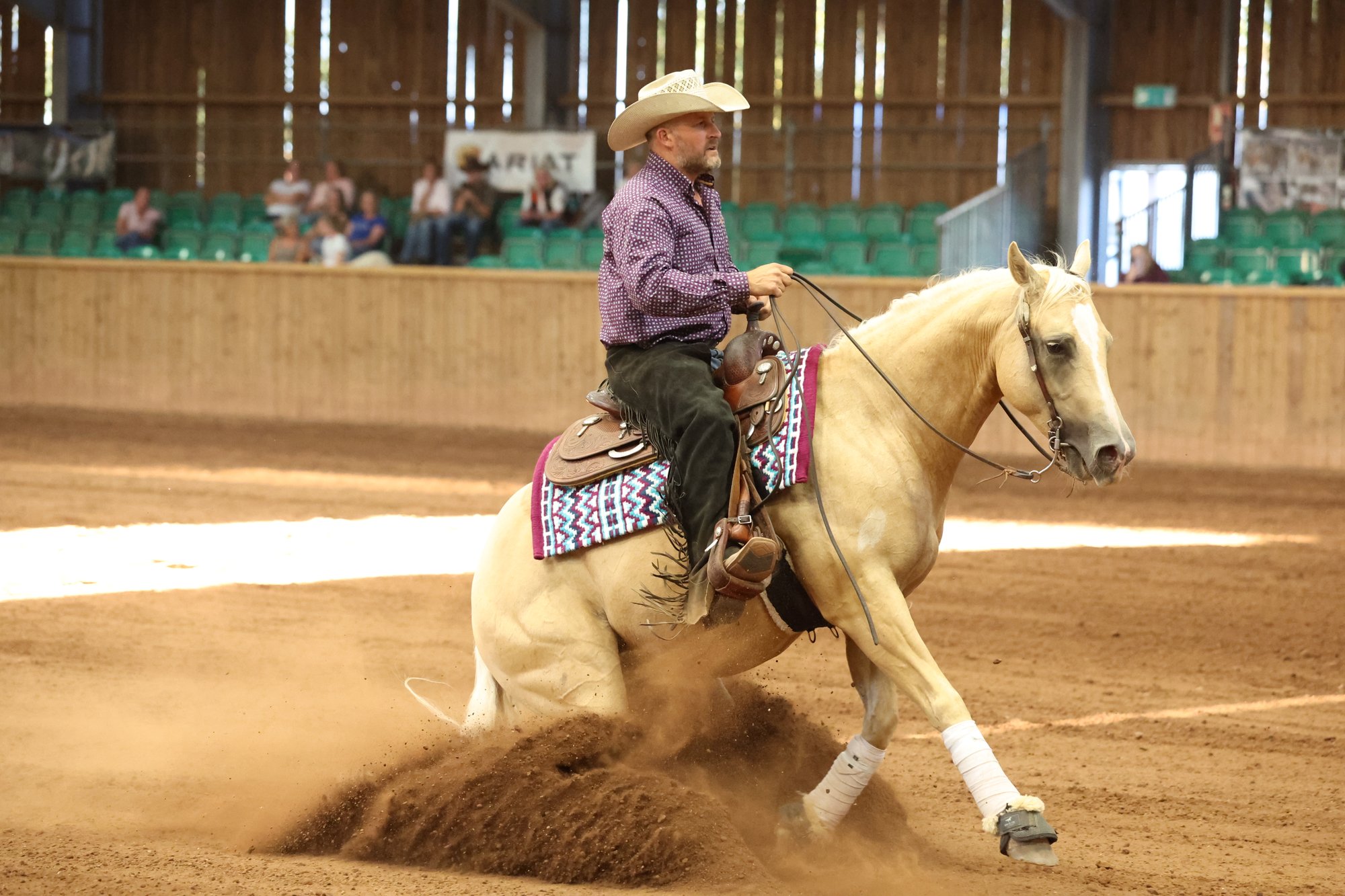
About Western Riding
Western riding grew out of the working life of the cowboy. A short history, and how it differs from English riding.
A short history
Western riding is a style of horse riding that grew from the ranching traditions the Spanish Conquistadors brought to the Americas. Its equipment and riding style developed to meet the working needs of the cowboy in the American West.
Cowboys worked long hours in the saddle, often over rough ground, and sometimes had to rope cattle with a lariat, also called a lasso. Because they needed one hand to control the horse and the other for the lariat, western horses were trained to neck rein: to change direction with light pressure of a rein against the neck.
Horses were also trained to use their natural instincts to follow the movements of a cow. So a riding style developed with a deep, secure seat, and training that taught the horse to respond to a very light rein.
How it differs from English riding
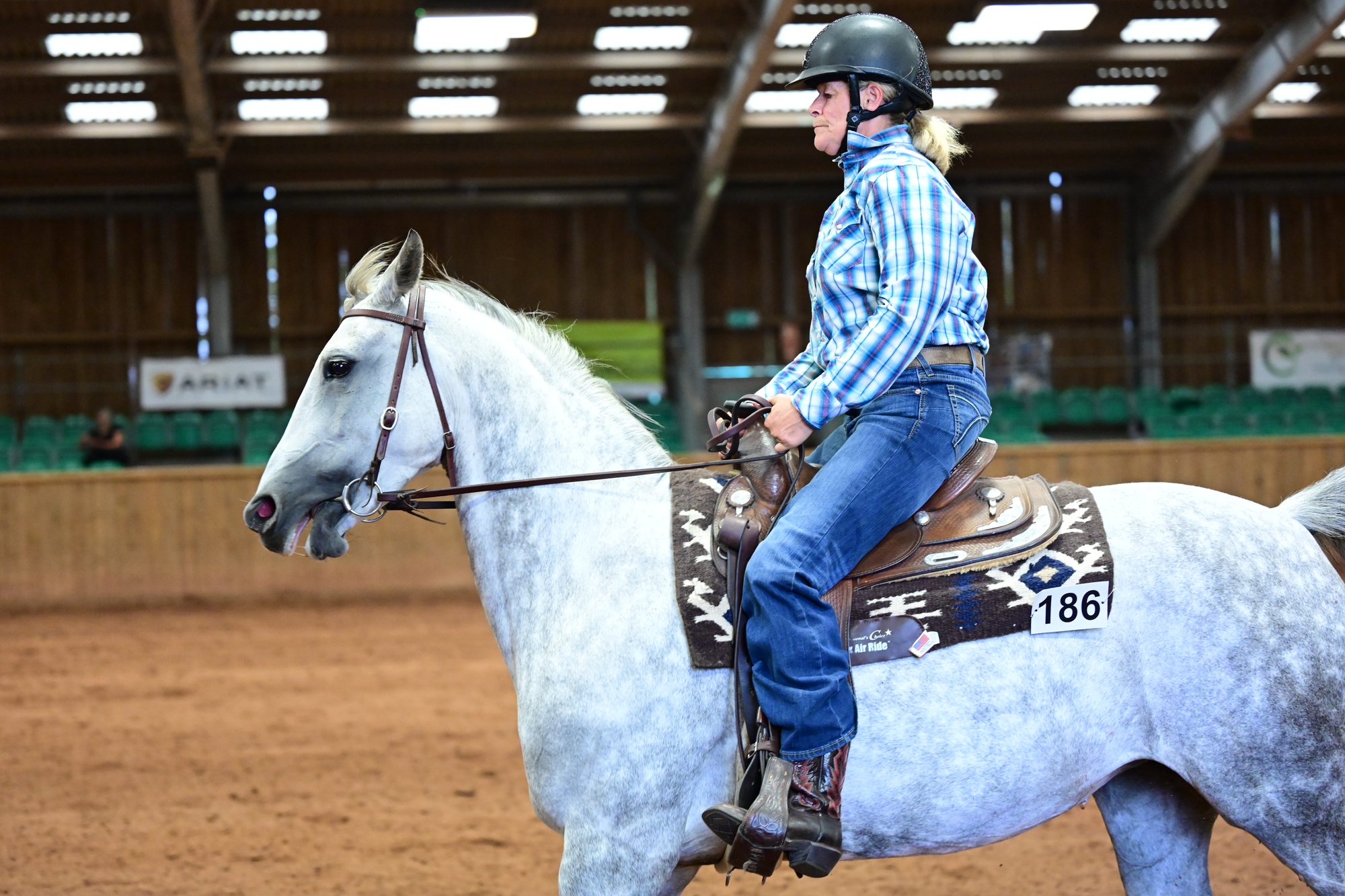
The saddle
The biggest difference. A western saddle is larger and heavier than an English saddle. It spreads the rider's weight over more of the horse's back, which makes it more comfortable, especially on long days chasing cows; an English saddle is designed to give the rider closer contact with the horse's back (Wilson, 2003). A western saddle usually has a saddle horn; an English saddle does not.
Photo: Alison James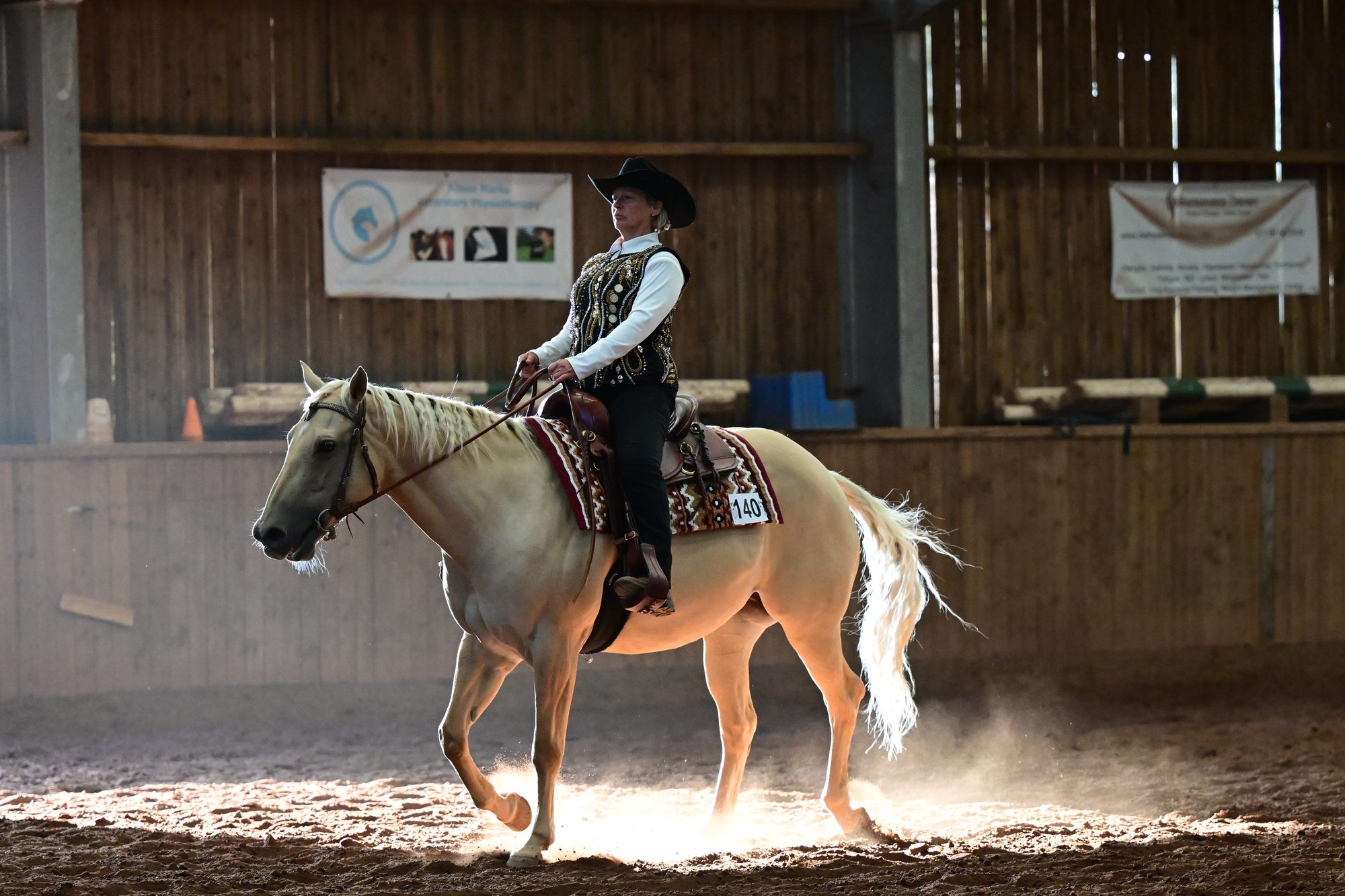
The reins
In English riding the rider keeps direct contact with the horse's mouth through the reins, and the reins are used as an "aid". In western riding, horses are mostly ridden with little or no contact. The rider gives directions with their seat, their weight and neck reining.
Photo: Alison James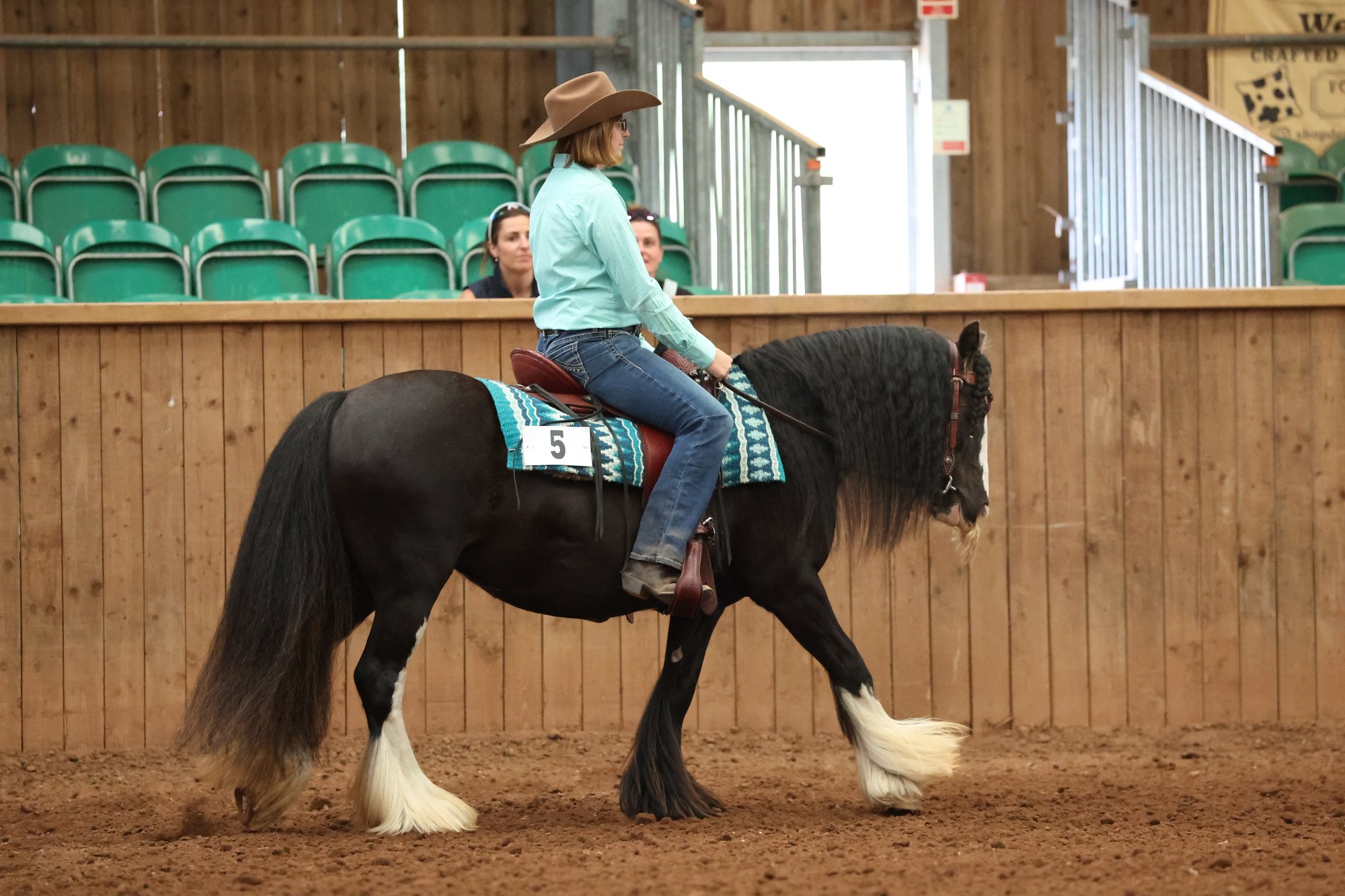
The rider
In both styles the rider sits tall and straight in the saddle, legs hanging naturally against the horse's sides, arms relaxed against their own sides. Flapping arms are frowned on (Wilson, 2003).
Photo: Fae Loudoun Photography
Western Riding, the class
"Western Riding" is also the name of a particular class in western competition, in which the horse rides a pattern that combines trail and reining elements. Read about every class.
See it for yourself
Watch a WES show, or book a lesson or two with a WES Professional and try western on your own horse.