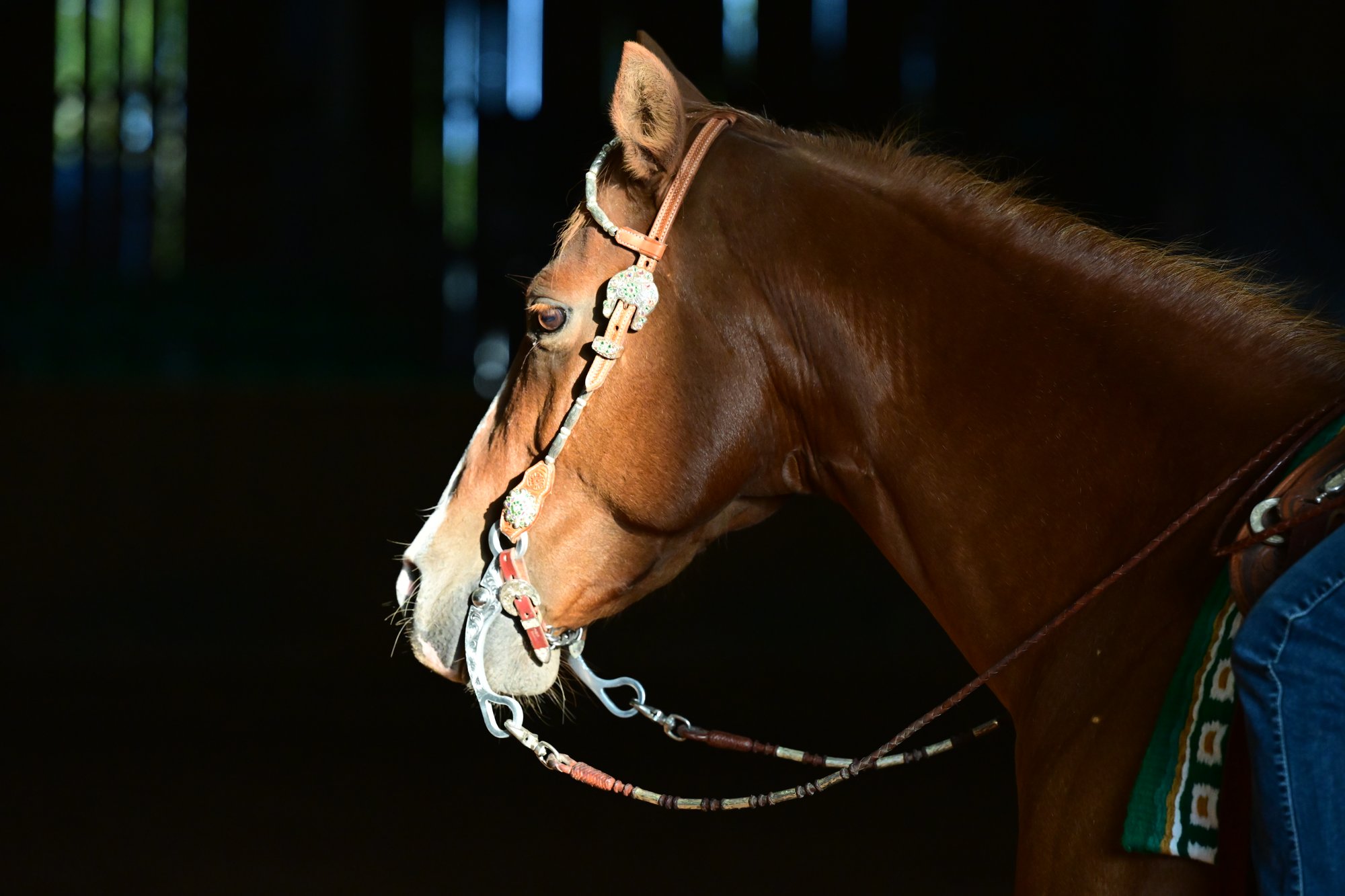
Tack and Show Equipment
Western tack and clothing were shaped by the cowboy's work. The saddle, the bridle and reins, and what a western rider wears.
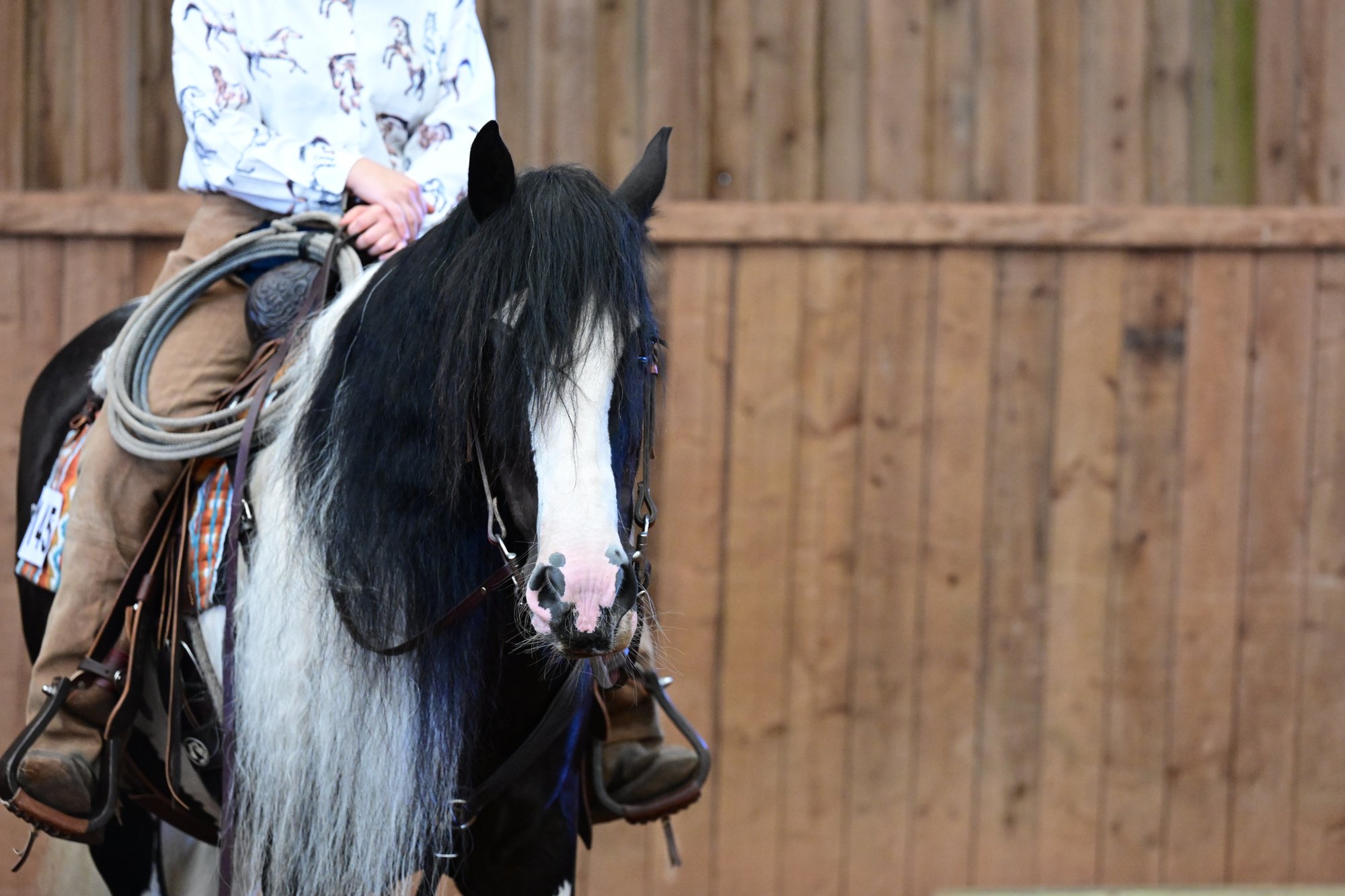
The saddle
Today's western saddles owe a great deal to the Spanish vaqueros, the first cowboys. The first saddles had no horn; the horn was added later by Spanish and Mexican vaqueros (Kelly, 2011).
A cowboy's work needed different tack from the "English" disciplines. Riders covered long distances and worked half-wild cattle, often at speed over rough, brushy ground, with the constant risk of being thrown miles from home and help. So the saddle has a heavy, substantial tree, traditionally made of wood, to absorb the shock of roping. Its prominent pommel is topped by a horn, which came about through trial and error as a good way to tow livestock (Kelly, 2011).
The horn is the easiest way to recognise a western saddle. It gives the rider support and can hold a lasso or other equipment (Gen, 2011). A western saddle also has a deep seat and a high cantle. In some areas, tapaderos ("taps") cover the front of the stirrups so brush cannot catch in them.
In the show ring (rule 5.9): in all ridden classes horses are shown only in a western saddle, ridden astride, with an appropriate bridle for the whole class. Silver equipment will not count over a good working outfit.
Talking to the horse on a loose rein
The bridle changed too, so the rider could talk to the horse even on a loose rein. The biggest difference between "English" and "Western" bridles is the bit. Most finished western horses are expected in time to go in a curb bit with a single pair of reins, with longer, looser shanks than the curb of an English double bridle or a pelham. Several kinds of rein developed over the years (Tack, 2017):
Split reins
The most common rein in the western world.
Mecates
A single rein used on California hackamores.
Romal reins
Romals come in two balanced parts, the reins and the romal, joined by a short strap.
Roping reins
A single rein of varying length, often used in roping and other speed events.
Snaffle, hackamore and curb
Young horses are usually started under saddle in a simple snaffle bit, or in the vaquero's classic tool, the bosal-style hackamore.
Snaffle (rule 5.6): a conventional O-ring, egg-butt or D-ring, with a smooth, unwrapped mouthpiece of two or three pieces.
Hackamore (rule 5.5): a flexible braided rawhide, leather or rope bosal with a complete mecate rein. Horsehair bosals and mechanical hackamores are not allowed.
Curb (rule 5.7): a bit with shanks that acts with leverage, no longer than 8½ inches (215mm) overall, always with a curb strap or chain that touches the horse's chin.
Rein hand (rule 5.8): with split reins and a curb bit, one hand on the reins and it is not changed; with a snaffle, one or two hands.
What the rider wears
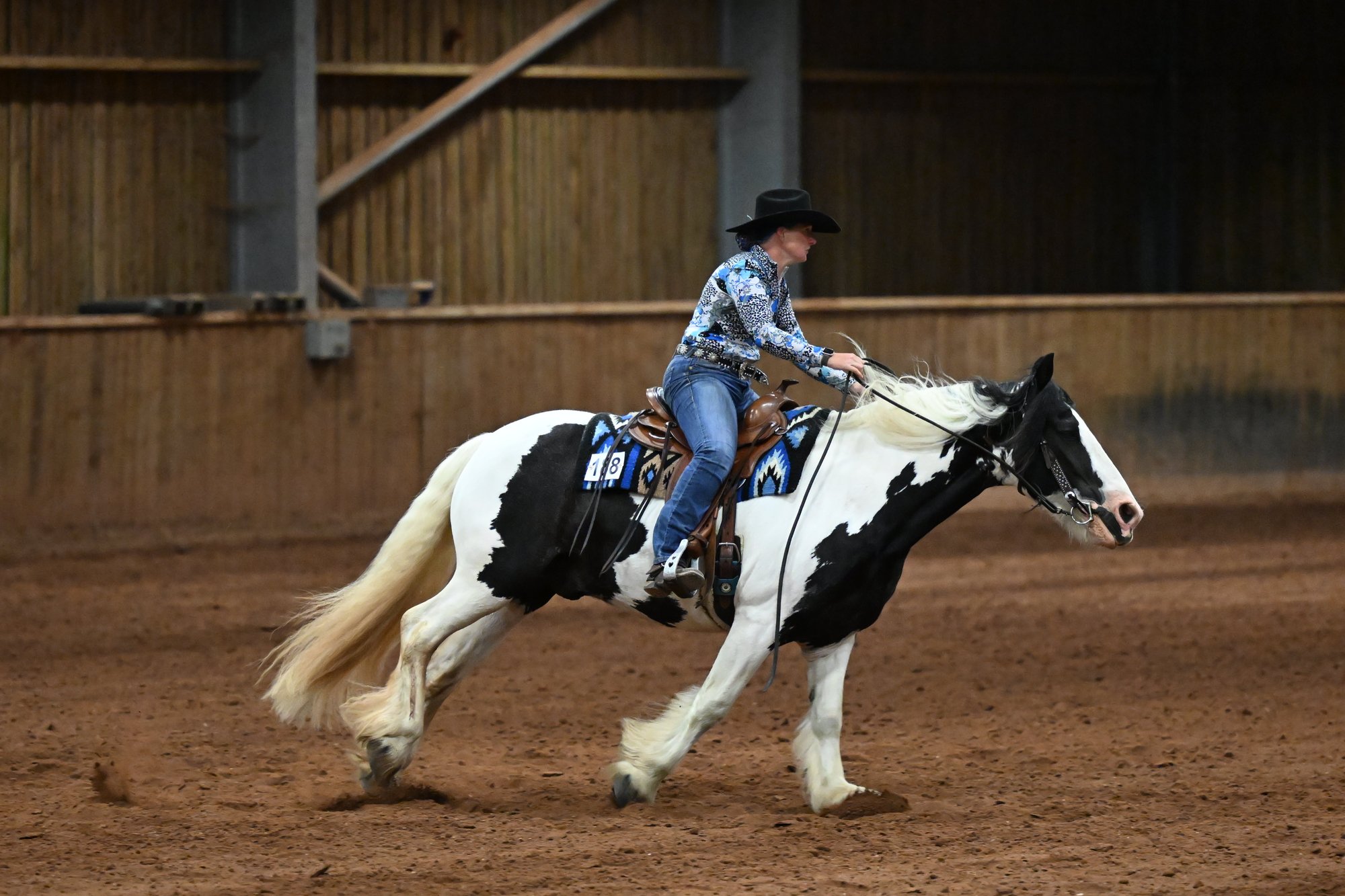
Western clothing is different from that of the "English" dressage, hunt seat or saddle seat rider. Practical western clothing is a long-sleeved work shirt, denim jeans, boots and a wide-brimmed cowboy hat.
Riders usually wear protective leather leggings called "chaps" (from the Spanish chaparajos, often said "shaps"). They help the rider stay in the saddle and protect the legs when riding through brush.
At rodeo, cutting and reining competitions the usual outfit is clean, well-fitting work clothing, especially for men, though sometimes in brighter colours or finer fabrics.
In the show ring (rule 5.3): clean, neat western attire is compulsory in every class, and the hat must be on the rider's head when they enter the ring.
Safety: hats, boots and back protectors
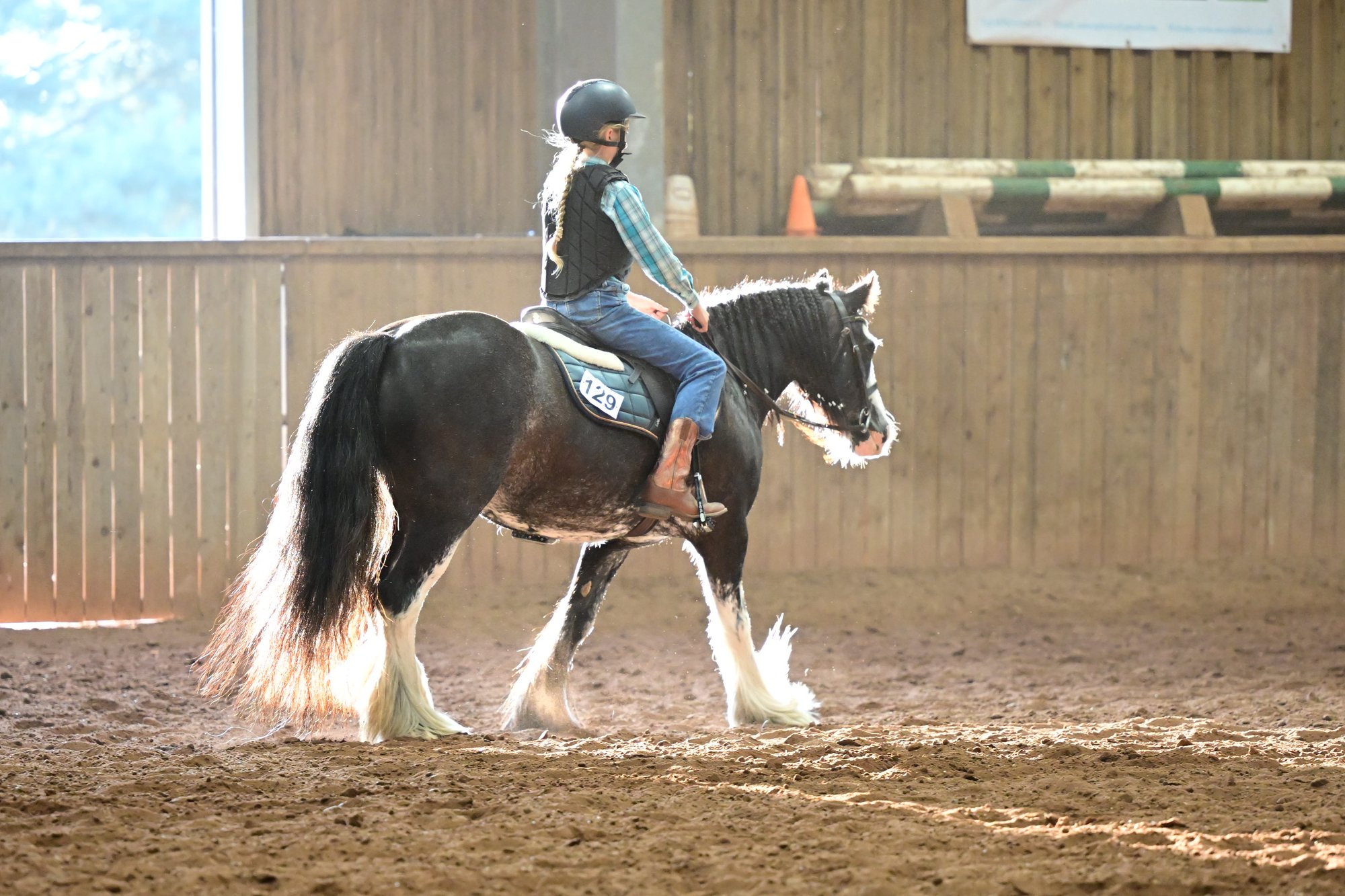
Cowboy boots have more pointed toes and higher heels than an ordinary work boot. This stops the rider's foot slipping through the stirrup in a fall and the rider being dragged.
Hard hats (rule 5.1): everyone mounted at a WES activity, competitors, helpers and grooms alike, wears a BHS Assessments Hat Rules compliant hard hat relevant to the current year. Competitors aged 19 and over at a WES approved or affiliated show may wear a Stetson instead, in competition and warm-up, once they have given Show Management a signed disclaimer.
Youth riders (rule 5.1.1): every youth competitor, aged 18 and under, wears a compliant hard hat at all times when riding or working a horse in hand at a WES event, clinics and shows alike.
Schooling and hacking (rule 5.1.2): an approved hard hat is recommended whenever you school, hack out or lead a horse.
Back protectors (rule 5.2): back protectors that meet the current BETA standard may be worn at every Society event.
Ready for the show ring?
Find out what each class looks for, and which tack and bits each category allows.